
Every Community Has a Language
Learn the patterns of connection, care, and trust that a community recognizes.
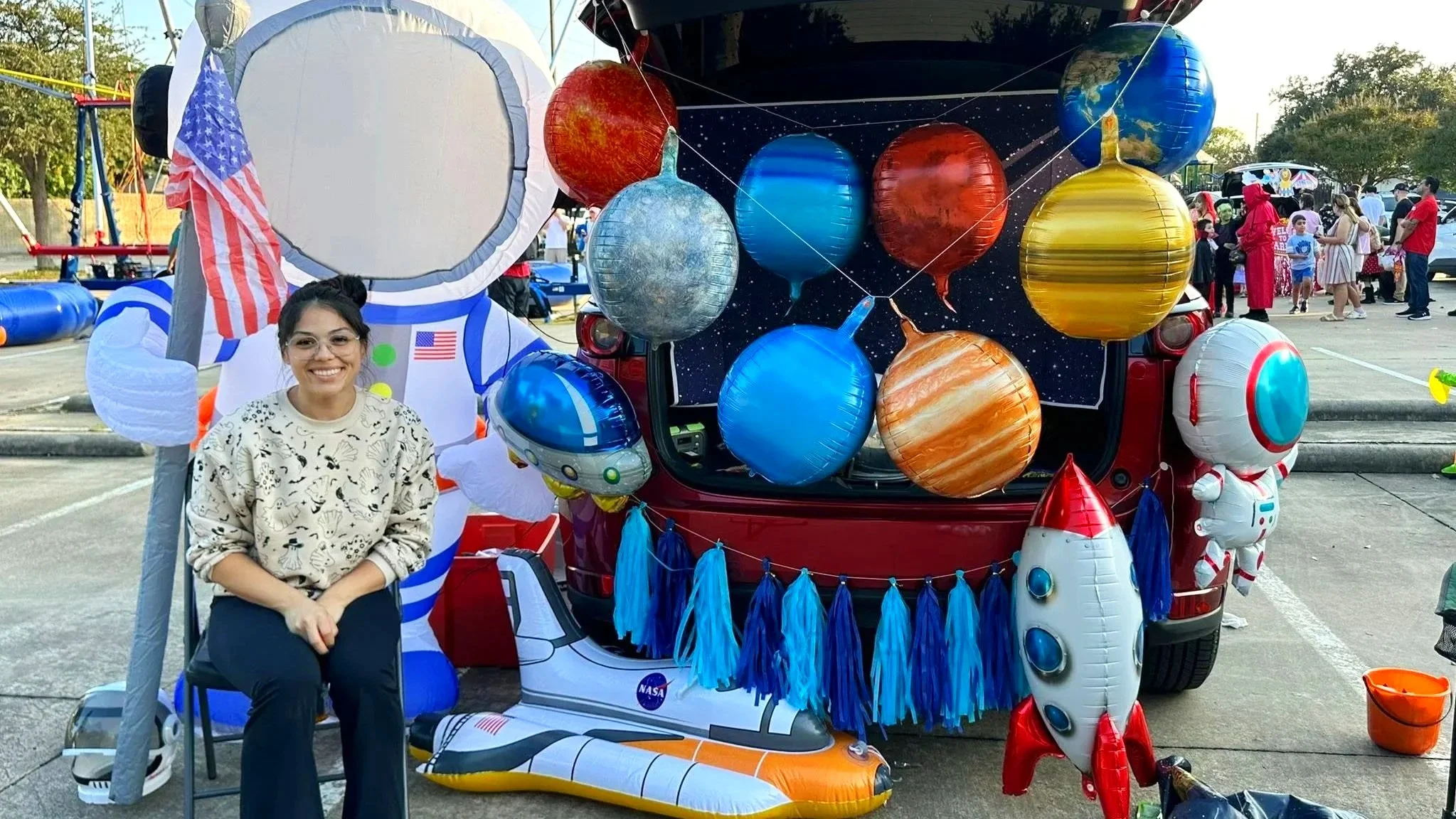
I was directing volunteers in the parking lot when I realized I would not be returning to the event that was mainly taking place at my church.
A few months earlier, one of our ministry leaders approached me with an idea for a community gathering. The goal was straightforward: create a fun, welcoming experience for local families and build meaningful connections with our neighbors. Around 700 people attended. Afterward, the same leader asked, “Pastor Peter, can we try something for Christmas?”
“Why not?” I replied.
The team began planning what eventually became “Holiday in Whoville.” As I watched the preparations unfold, I remember wondering whether anyone from the community would actually come. Part of me even worried that we would get bashed by the community on social media.
The day arrived, and almost immediately, we realized we had underestimated the response. Instead of a few hundred people, nearly 5,000 attended. Traffic backed up, volunteers improvised, and our carefully laid plans were stretched beyond their limits. By the end of the evening, we were exhausted and amazed. That experience led our leadership team to ask a simple question: Why did this connect with our community?
The answer can be summarized in one word: language. Not merely spoken language, but language that is tangible, creates connection, and extends warmth. I mean the ways people recognize care and belonging. Here are a few principles I believe we learned through that experience.
1. Understanding precedes effective engagement.
One of the greatest mistakes churches can make is assuming they already know their community.
Every congregation exists within a unique mission field. Demographics matter, but demographics alone are not enough. We must also understand the hopes, fears, values, and questions of the people around us.
At Canyon Creek Project, we began by studying our community. We looked at demographic data, but we also paid attention to psychographics—the values and motivations that shape people’s decisions. Then we sat down with community leaders, educators, business owners, and even leaders from other faith communities.
In the Bible, we find several examples of this pattern. Before entering the land of milk and honey, Moses sends a team to understand the territory (Numbers 13). Before Paul preached in Athens, he first observed Athens (Acts 17:22–23). Understanding precedes effective engagement.
2. Speak the language people already understand.
As we listened, we discovered that one of the strongest values in our community was family.
People looked for places where families could spend meaningful time together. We sought to communicate the Gospel through a language our community already understood. That language took the form of family-centered experiences. So, we created spaces for parents and their children to have fun and to encounter God. We did the latter through Family Experience, a worship service where we co-disciple their children with parents.
This will look different for every church because every community responds naturally to different settings and actions. It may be service, education, mentoring, recreation, or community development. The approach will differ, but the principle remains the same: speak the language people already understand.
In the Gospel, we find Jesus consistently applying this through parables. He met people within their world before inviting them to follow him (Matthew 20:1–16). Language matters.
3. Create spaces marked by warmth.
Understanding a community and speaking its language are the beginning. People must also encounter warmth. Others call this hospitality, but I find that many churches define it as a single area: the greeters' team. Here, warmth means creating a welcoming atmosphere throughout the whole experience.
One of the most powerful evangelistic tools a church possesses is warmth. I remember watching a woman enter a church I previously pastored, carrying a venti Starbucks and with two dogs. One in her arms and the other walking right beside her. She quietly sat near the front of the sanctuary. As a pastor, I found myself wondering how the congregation would respond.
When the service ended, members approached her, introduced themselves, and invited her to lunch. Later, she explained that it had been a hot day, and she could not leave the dogs in the car, but she felt impressed to come to church. That evening, she was back worshipping together with us for our vespers.
Warmth carried that moment. People often arrive carrying circumstances we do not understand, but if we can create a space that is warm and non-judgmental, great possibilities can take place. The aim of warmth is not that guests will meet our expectations, but that they will encounter the grace of Christ through His people.
Warmth creates the type of environment where spiritual conversations can flourish. It allows people to ask questions, wrestle with doubts, and explore faith without fear of rejection.
4. Relationships are the currency of transformation.
Programs, events, and services may attract attention, but relationships change lives.
Many of the most meaningful spiritual conversations at Canyon Creek Project have not happened during major events. They have happened afterward, in coffee shops, around dinner tables, during Bible studies, and through ongoing friendships.
As I write this, I meet weekly with a GenZer from the community who first connected with our church through our worship service. In that space, he encountered warmth. Now he wants to know more about the Sabbath and how it connects to Jesus.
Another GenZer from our community, who is a Buddhist, calls me “pastor,” and we often connect for conversations. A young secular Muslim serves at our church, and I had no idea. Then one day, I met him while he was serving. My team had received him and empowered him (love that!). Today, he comes every single week to worship with us.
This pattern has repeated itself countless times. Events may open the door, but relationships invite people to walk through it. And that’s the purpose. Through everyday Christian people, God’s grace creates the spaces where others find hope and the greatest revelation of God’s transforming love, Jesus.
Final Thoughts
Every community has a language. The challenge for pastors is not simply to preach faithfully from the pulpit, though that remains essential. Rather, the challenge is to understand the people God has already placed around us and to communicate the unchanging gospel in ways they can hear. That language is the patterns of connection, care, and trust a community recognizes.
At Canyon Creek Project, we are not a perfect church; yet understanding our community helped us discover that language. In another church, it may look entirely different. The method is adaptable; the principle is universal.
Listen carefully. Learn your community. Speak their language. Create spaces of warmth. Build relationships. When churches do these things well, they become places where people can encounter not merely a ministry program, but the transforming grace of Jesus Christ.
Peter Casillas, the Lead Pastor and Church Planter of Canyon Creek Project Church, is a space creator passionate about cultivating intentional environments where meaningful connections can flourish, and people can wrestle honestly with Jesus.