
How the invisible power of patience unlocked the unlikely growth of early Christianity
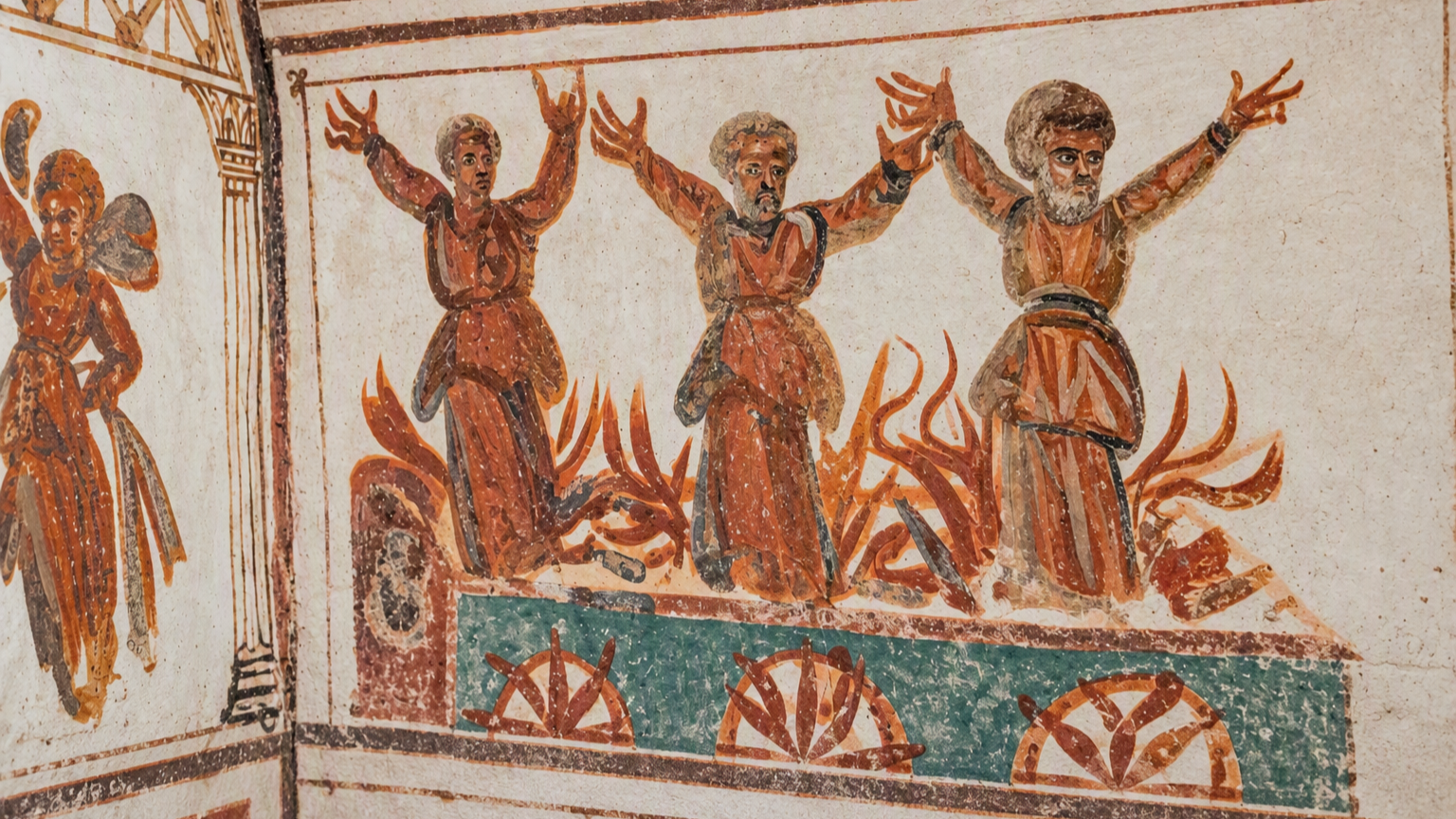
Shared on Flickr and published under a CC BY-NC-SA 2.0 license. Edited by AI.
How did a small, marginalized, and persecuted religion grow so successfully that it became the official religion of the Roman Empire in less than four hundred years? While several scholars have attempted to answer this question, church historian Alan Kreider provides additional insights into the history of the unlikely growth of early Christianity in The Patient Ferment of the Early Church: The Improbable Rise of Christianity in the Roman Empire.
The Virtue of Patience
Kreider notes that in the first few centuries, one looks in vain for treatises on methods of evangelism or church growth, active public mission strategies, or church services used to attract new members. Highlighting the formative role of catechesis (preparation for baptism) and worship in early Christianity, he suggests instead that one should look to the lives of early Christians who embodied the virtue of patience and whose behavior and habits were distinctive enough to attract outsiders. He uses the metaphor of “ferment” for the organic, “invisible power” of Christianity’s growth.
Kreider outlines the virtue of patience as reflected in the writings of early church fathers such as Cyprian, Tertullian, Justin, Clement, and Lactantius. They encouraged Christians to display their faith and embody Jesus’s teachings through visible actions. The early church fathers especially emphasized patience because it is rooted in God’s character, displays active trust in God to accomplish His purposes in His time, is unconventional and countercultural, is non-violent, and respects religious freedom and freedom of choice.
Displaying virtues such as patience through visible actions is what sociologist Pierre Bourdieu calls habitus, the daily, habitual ways in which we express learned conventions through how we live, speak, and act. This distinct Christian way of life—patience in business, discipline in sexual matters, the inclusion of people from all classes of society in their communities, care for the sick and the poor, and prohibition against taking life, as well as how they reacted in times of persecution—was intriguing and attractive to pagans. It also spoke louder than words, especially in a context where actively and publicly preaching the gospel would have led to persecution and likely death. More often than not, it was ordinary “lay” Christians exhibiting such distinctive behaviors while engaging with society who were responsible for the spread of Christianity. The attractiveness of Christian habitus combined with the pagans’ dissatisfaction with their traditional religions and private associations drew them to such Christians, eventually leading to conversions and the growth of the faith.
Preparation for Baptism
Despite the difficulties with knowing exactly how the catechetical process worked in different parts of the empire, according to Kreider, the Apostolic Tradition (an early “church manual”) provides a useful model for understanding the careful process of preparing interested candidates for baptism. Someone who was interested in the faith would approach a Christian—usually a friend or colleague—with questions about their distinctive way of life and demonstrate interest in knowing more. After renouncing any practices that were incompatible with Christianity—such as idolatry, adultery, and killing—and receiving approval from the church elders, the candidate would initiate a period of preparation under the sponsorship of his or her Christian friend that could take up to three years.
During this time, the candidate’s habits and values would be shaped by spending time with their sponsor in everyday activities, a type of apprenticeship where they would learn how to embody the distinctive practices of the community. This included giving up aspects of pagan lifestyle that were incongruent with their new faith and learning how to share resources, show hospitality, and care for the poor. They would also learn the teachings and narratives of the Scriptures during this period, though character development was prioritized over doctrinal knowledge. The candidate’s character and behavior would be scrutinized by the elders to ascertain whether they were progressing in embodying Christian values until they were ready for baptism. Only after baptism were they allowed to join Christian worship services, where Christian beliefs and practices continued to be reinforced in the community.
From the Power of Patience to Impatient Power
Kreider notes that things changed significantly with Constantine’s conversion and the state sponsorship of Christianity. It was no longer a minority, persecuted religion, and Christian communities no longer had to be wary of ill-intentioned strangers infiltrating their worship services. But with the power of the state came impatience, whether in the form of coercion or less careful preparation before baptism.
Augustine’s treatise on patience reflects this shift in definition, where the virtue of patience is no longer supreme but qualified to accommodate circumstances. In other words, impatience was justified if it meant combating heresies or if it served the purposes of loving intentions. As a result of these shifts, Christianity would later become associated with religious violence and imperialism.
Character Formation Today
By his own admission, Kreider’s portrait of the early centuries of Christianity might be faulted for being too generalized or tainted by his own background as a pacifist Mennonite. Nonetheless, it is a portrait that is supported by careful research and analysis of numerous sources from the period in question. It is also a portrait that coheres with Seventh-day Adventist emphases on freedom of choice and the display of God’s character to the world in light of the Great Controversy. It should therefore invite us to pause and reflect on our own ministry and mission practices today.
While we have the privilege of living in a free society where Christianity is not a persecuted religion, there is still much to be learned from the virtue of patience as described in Patient Ferment. Could it be that we’ve prioritized doctrinal knowledge over character formation and intentional discipleship in baptismal candidates? How are we teaching our members to embody the distinctive behaviors of Christianity that reflect the character of God and prove attractive to outsiders without the need of explicit words? And most importantly, are we cultivating in ourselves the virtue of patience, trusting in God and allowing Him to work according to His timing and giving Him the credit for any subsequent growth? The Patient Ferment of the Early Church is well worth the read for pastors and leaders aiming to fulfill God’s mission in today’s world.
Keldie Paroschi has a PhD in Biblical Studies (New Testament) from Asbury Theological Seminary, and has worked as an online teacher, editor, and chaplain. Currently, she serves as an Associate Director of the Biblical Research Institute at the General Conference of the Seventh-day Adventist Church.